"Think globally, act locally "
This is the purpose of a translation. The reader of your documentation
must feel that your offices or factories are two blocks away from their
home and that you can speak their language.
How your documentation actually gets translated
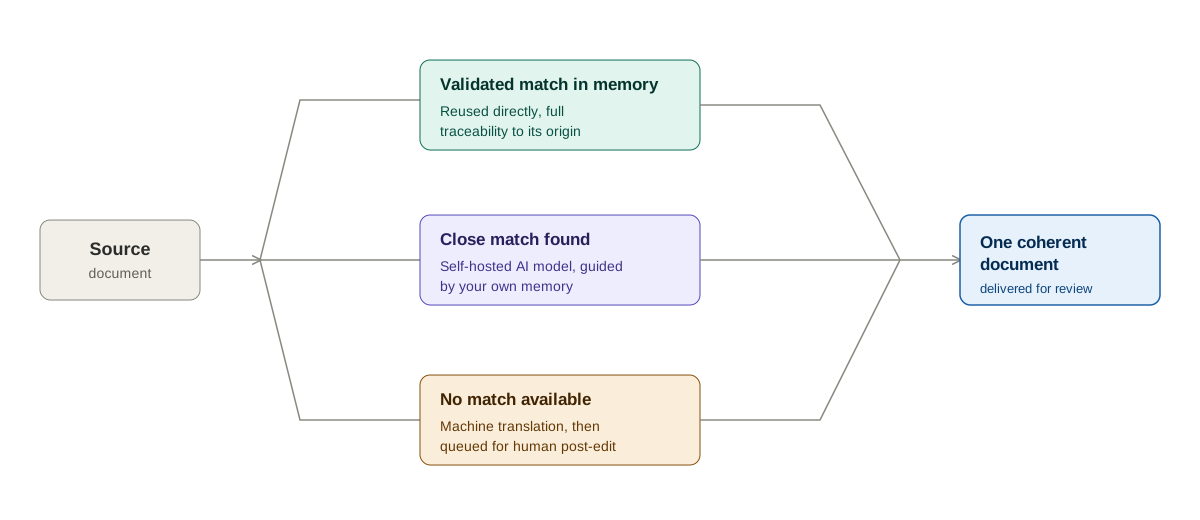
Every sentence in your document is evaluated on its own, and handled by whichever resource fits it best, not by a single blanket pass of machine translation followed by a blanket human review.
- A validated match exists in your memory → reused directly, with full traceability back to the project it came from.
- A close match exists → a self-hosted AI model drafts the translation, guided by the nearest examples retrieved from your own memory — not a generic rewrite, a translation shaped by how you have already said this before.
- Nothing relevant exists → the sentence goes to machine translation, then to a human linguist for review before it reaches your document.
The output is one coherent file. Nothing marks where the seams are — because from the reader's side, there shouldn't be any.
Why "similar" isn't good enough
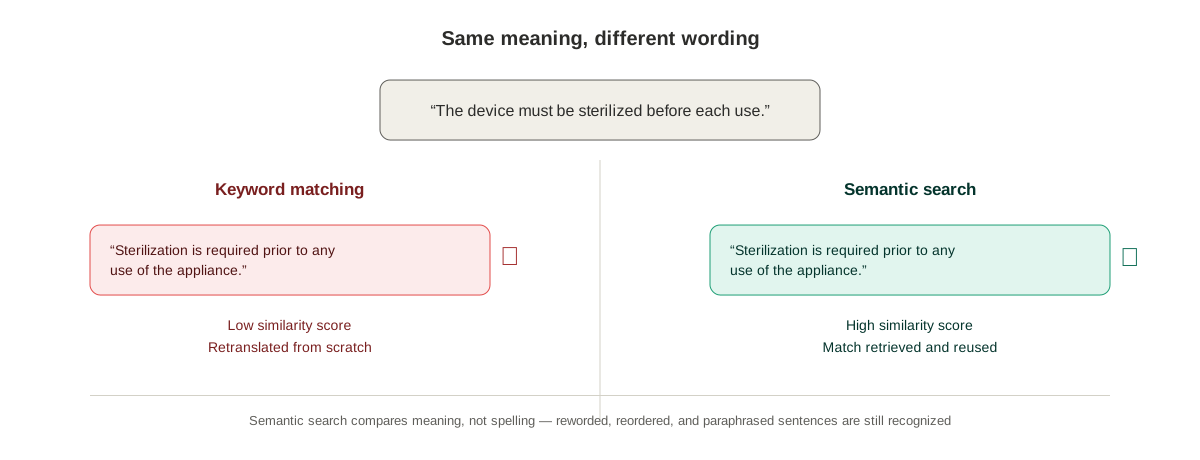
Most translation memory tools compare sentences the way a spell-checker
compares words: character by character. Two sentences that mean the same
thing but are phrased differently score as unrelated, and get retranslated
from scratch — even when your own linguists validated the exact same idea
last year, in a different document, with different wording.
DAT's platform searches by meaning instead. A sentence retrieves its previously validated translation even when the wording, the sentence order, or the terms used are different, as long as the meaning matches. Across a memory spanning more than 30 languages and just as many technical domains, that difference compounds: every additional match found is a sentence delivered from validated human work instead of a fresh machine guess.
On projects where a client's memory is fully leveraged, more than 8 out of 10 memory matches are delivered without any correction at all.
Every format you actually work with
Translation only helps if it fits into the files you already produce. DAT's platform works natively with:
- Word documents (.docx) — including tables, headers and footers, embedded images and graphics, and document styling, all preserved exactly as they were in the source file.
- Excel spreadsheets (.xlsx) — cell by cell, formatting and formulas left untouched.
- IDML (Adobe InDesign) — for typeset technical documentation and marketing material.
- SDLXLIFF — bilingual files exported directly from Trados Studio, so projects can move between your CAT environment and ours without reformatting or losing tag structure.
If your team works in its own CAT tool, a project can be delivered as a standard bilingual exchange file and re-imported wherever you need it — your existing workflow stays usable, DAT's memory works alongside it rather than replacing it.
Quality control built on an industry standard
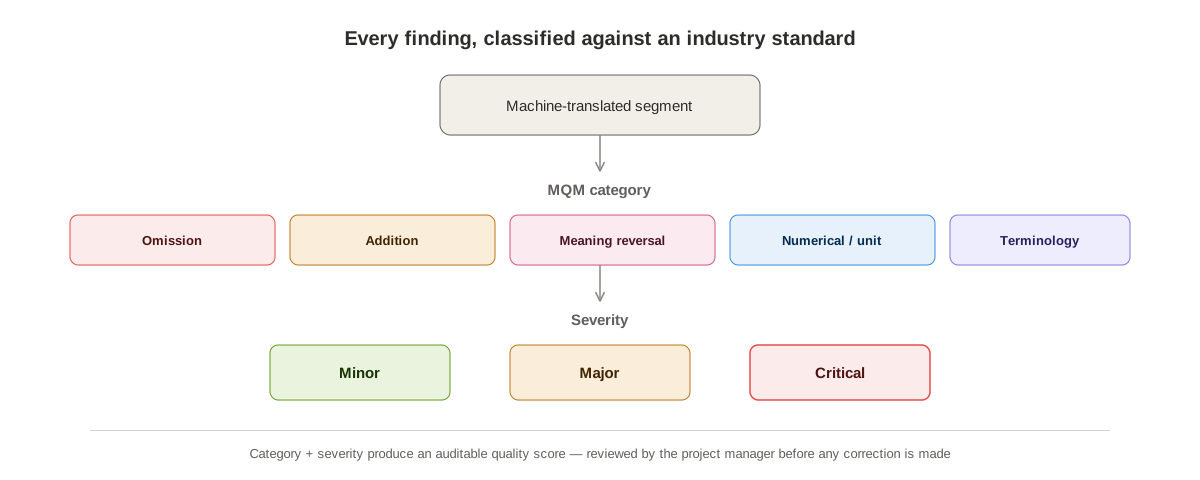
Machine-assisted segments don't just get spot-checked: every one of them can be run through a structured review before delivery.
Two checks run in combination: a terminology consistency pass that flags when the same source sentence, or the same term, was translated differently in different places in the same document: the single most common inconsistency in long technical documents, and the hardest for a human reviewer to catch by eye across hundreds of pages. And an AI-assisted linguistic review, scored against the MQM (Multidimensional Quality Metrics) framework: every issue found is classified by category - omission, addition, meaning reversal, numerical or unit mismatch, terminology that should have stayed untranslated - and by severity: minor to critical, producing an auditable score instead of a simple pass or fail.
The review is advisory. It flags; it never corrects on its own. Every finding goes to your project manager for validation before anything changes in the delivered document.
A portal built for review, not just translation
Your linguists and reviewers work in a browser-based portal that shows, for every segment, where its translation came from and how it was produced: memory, AI-assisted, or machine translation — alongside any quality alert raised for it.
Two tools make revision faster than scrolling through a flat document:
- concordance search, which finds every place a term or phrase appears elsewhere in the same document, so a reviewer can check, and fix, every occurrence at once instead of one at a time; and
- terminology search, which looks up how a term has been translated anywhere in your memory, across every past project.
Every correction a reviewer makes is reflected in memory immediately — so the next time that sentence appears, in this document or the next project, it's already right.

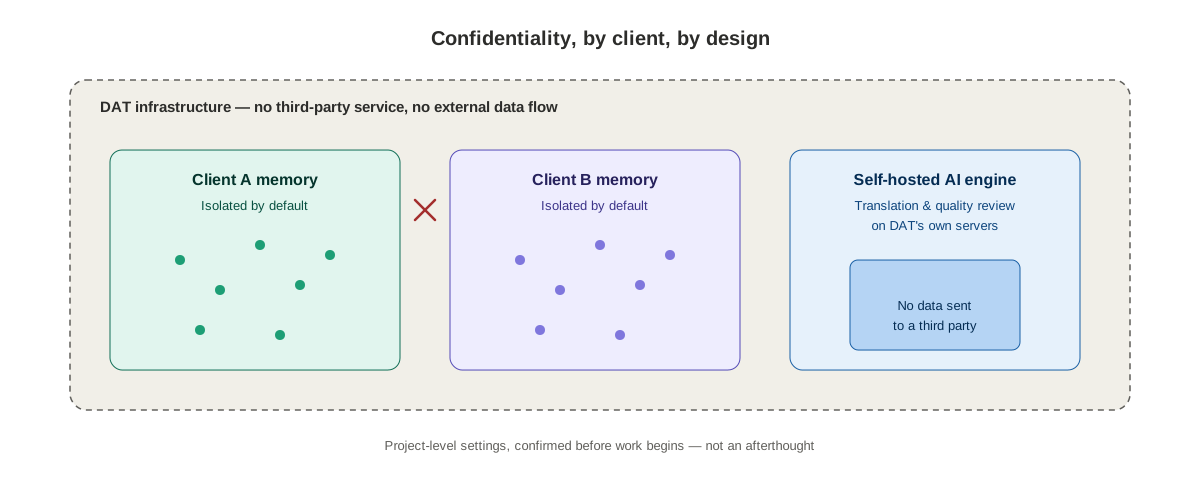
Confidentiality, confirmed before work begins
Your memory is never mixed with another client's by default. Translation
itself always runs on DAT's own infrastructure, never on a third-party
service. Projects that require it can also restrict quality review to
fully in-house processing. These are settings you confirm at the start of
a project, not assumptions you have to trust.